This is a throwback to a post published on March 16, 2008.

Pattern: Le Lapin Noir
Yarn: a whack of angora I bought many ages ago from Cottage Craft Angora
Why I love this one:
and oh, how I do!
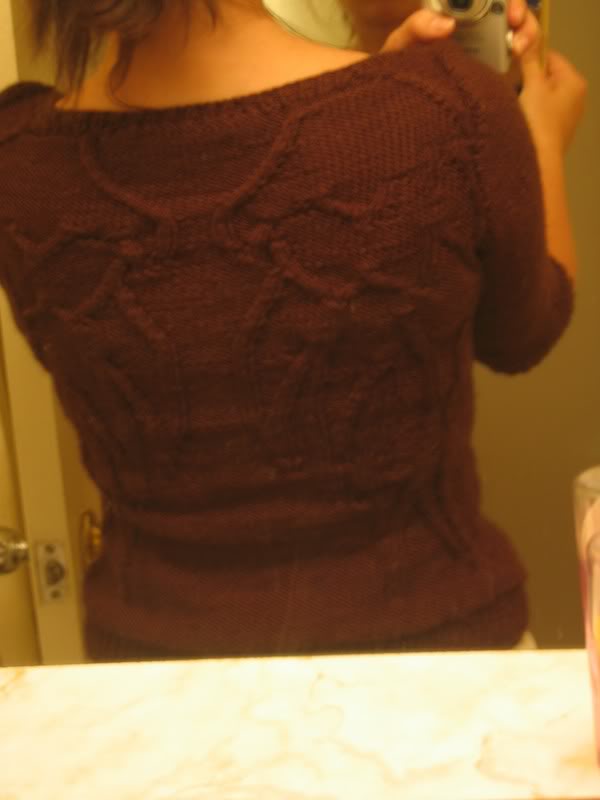
Despite numerous mistakes (and I’ve learned to live with the multitude of errors I incorporate into each and every knit!) I love the fit, I like the shape, and it’s successfully fulfilled a search I have been undertaking to find the perfect argyle sweater for nigh on 2 years now.

Unless you’re looking for one, you probably wouldn’t realize that practically every bloody argyle sweater in stores has a v neck. I wanted a scoop neck.
Also, I’m fairly picky when it comes to the colours I wear. Though, I will hazard anyone interested in knitting a very small-gauge sweater in black: not so good for maintaining good vision.

I would have made 3/4 length sleeves (as is my way) but I ran out of black yarn. I think the short sleeves work alright, and are less incongruous than one would imagine on an angora sweater.
The yarn is amazingly dreamily soft. Just as soft (dare I say?) as the bellies of canaries. Highly recommended. Knit yourself an angora sweater.

This sweater was inspired by retro patterns and the angora yarn itself. I’d never worked with it before, and wanted to see how it behaved.
I’ve worn it a few times, and have found it to be sturdier than I would have imagined. I feared it would stretch to frightening proportions as soon as I was moving around in it. This didn’t happen at all.
I also feared it would pill horribly. This also hasn’t happened (yet).
As I understand angora is (one of the) warmest fibres one can wrap around a body, I feared it might overheat me. I had no such problems.
As you can see, it creates a beautiful halo of bunny-goodness all around you.

I didn’t block it (shock and horror!). I wasn’t sure how it would take to the water. I’m entirely pleased with the intarsia, though, and I don’t know that it would benefit from a blocking anyhow.
***************
To make it a suitable warmer-weather knit, a light sock yarn could be substituted.Needles:
2.5 mm straights
2.25 mm circs (at least 18” long)
Yarn:
Cottage Craft Angora 100% angora yarn
Approx. 90 metres/hank (discontinued)
http://www.cottagecraftangora.com/
Black 8 (9, 10, 12, 14, 16, 18) hanks
Pink 1 (2, 2, 3, 3, 4, 4) hanks
White 1 (1, 1, 1, 2, 2, 2) hanks
Gauge:
8 sts/ inch
10 rows/ inch
Sizes:
XS: 28”-30”
S: 32”-34”
M:36”-38”
L: 40”-42”
XL: 44”-46”
XXL: 48”-50”
XXXL: 52”-54”
Front
Using long-tail method and 2.5mm needles, cast on 92 (108, 124, 144, 160, 184, 200) sts.
Knit in 1×1 ribbing for 4 (4, 5, 5, 5, 6, 6) inches.
Decrease row: You will be decreasing 2 sts each side every time you do a decrease row.
K1, P2tog, K2tog, knit in rib across sts until 5 before the end of the row. Then Kl, P2tog, K2tog, P1.
*Continuing in rib, knit another 1 (1, 0.5, 0.5, 0.5, 0.75, 0.5) inches.
Work another decrease row as stated above.
Repeat from * 1 (1, 1, 3, 3, 4, 2) more times.
At this point you should have 80 (96, 112, 124, 140, 164, 184) sts.
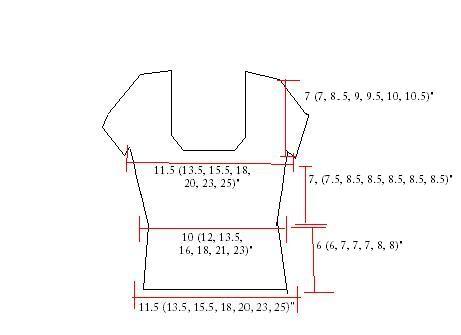
Knit in rib until you have 6 (6, 7, 7, 7, 8, 8) inches from the cast on edge.
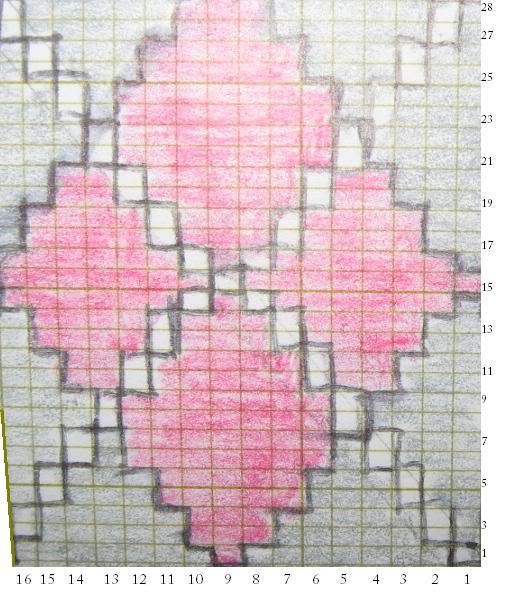
Stop working rib, and begin working the intarsia chart.
Begin at number 1 (1, 1, 10, 10, 14, 13) listed at bottom of intarsia chart. This will centre your argyle on the sweater.
Work the chart for 1 (1, 2, 2, 2, 2, 2) inches.
Increase row: You will be increasing 1 st each side every time you do an increase row.
(Work argyle pattern in to increases).
K1, increase 1, work across row until 2 sts before end, increase 1, knit last st.
*Work another 0.5 inches.
Work increase row.
Repeat from * 4 (1, 4, 8, 8, 8, 6) more times.
You should have 96 (102, 124, 144, 160, 184, 200) sts.
Now you will continue knitting the intarsia until piece measures 13 (13.5, 15.5, 15.5, 15.5, 16.5, 16.5) inches from the cast on edge.
Work across 27 (32, 42, 50, 56, 66, 74) sts, put middle 38 (38, 40, 44, 48, 52, 52) sts on a stitch holder, work across the remaining 27 (32, 42, 50, 56, 66, 74) sts.
Work 2 rows
Cast off for armholes: (please read ahead – you’ll be shaping the neck at the same time!)
Cast off 6 (6, 8, 8, 10, 12, 14) sts on each side of next 2 rows.
Decrease 1 st each side every RS row 4 (4, 6, 8, 8, 8, 8) times.
Neck Shaping: AT SAME TIME AS ARMHOLE SHAPING
Decrease 1 st each side of neck every RS row 12 times.
Work until arm holes measure 7 (7, 8.5, 9, 9.5, 10, 10.5) inches.
Put sts on holders.
Back
Work the back in the same manner as the front (excluding the intarsia chart) until neckline.
When piece measures 14.5 (14.5, 16.5, 16.5, 16.5, 17.5, 17.5) inches, put centre 38 (38, 40, 44, 48, 52, 52) sts on a stitch holder, and work the neckline the same as for the front.
Sew front and back together along sides, and graft/Kitchener stitch tops of front and back together.
Neckline
Using 2.25 mm circular needles, pick up stitches along neckline, including the ones you’ve placed on stitch holders.
Work in a 1×1 rib for 1.5 (1.5, 1.5, 1.5, 2, 2, 2) inches.
Cast off (be careful: don’t cast off loosely!)
Arms
Cast on 76 (76, 88, 96, 108, 116, 128) sts.
Work 1×1 rib for 1 (1, 1.5, 1.5, 2, 2, 2.5) inches.
Begin Sleeve Cap:
Cast off 8 (8, 9, 10, 12, 12, 14) sts at the beginning of next 2 rows.
Knit in rib for 4 rows.
Decrease 1 st each side every other row 5 (5, 7, 9, 10, 14, 15) times.
Decrease 1 st each side every 4th row 10 (10, 10, 10, 10, 10, 10) times.
When sleeve cap measures 5.5 (5.5, 6, 7, 7.5, 8, 8.5) inches, decrease 1 st each side every row 5 (5, 7, 7, 10, 8, 9) times.
When sleeve cap is 6 (6, 6.5, 7.5, 8.5, 9, 9.5) inches from cast on edge, decrease 2 sts each side every other row 5 (5, 5, 5, 5, 5, 6) times.
When sleeve cap is 7 (7, 8.5, 9, 9.5, 10, 10.5) inches long, cast off.
Finishing
Sew sleeves onto body.
Weave in all ends.
Blocking the finished garment is optional (the original, knit in angora, was not blocked).
Tips
Intarsia can easily become a hassle of tangled ends. In order to keep sane, I wound and then cut off a few feet of each colour-section. This certainly did add to the number of ends I had to weave in come finishing time, but was slightly more manageable than large balls of yarn emanating from my work.
Think twice before you use black! (If only to maintain decent eyesight). You can’t imagine how frustrating it is to try and neatly sew up black knitted garments with tiny gauges!
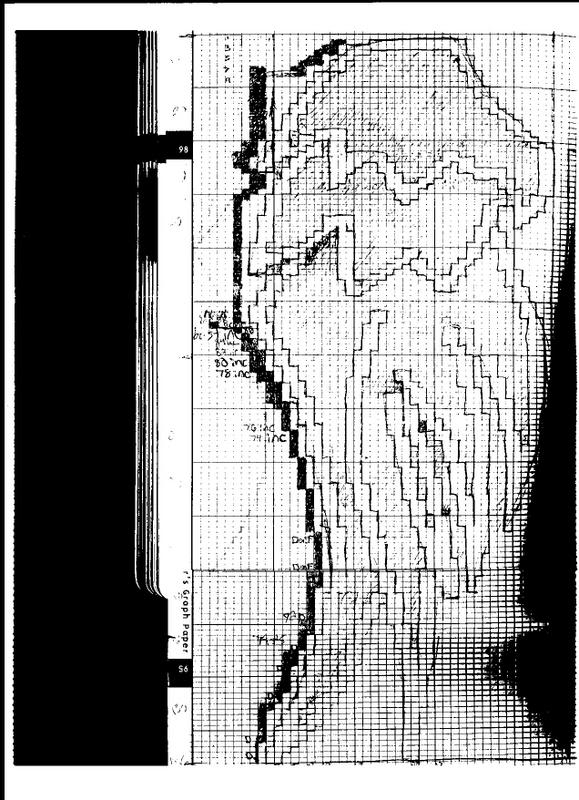
Intarsia Chart
Garment Schematic


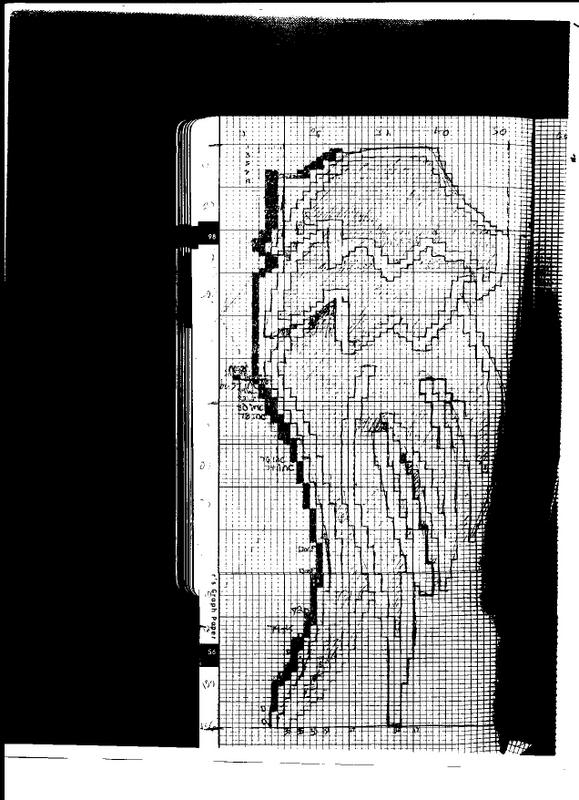

 Canary Knits